Febrile Seizures in Children: Signs That Require Neurological Care
- posted: Dec. 11, 2025
At Precision Epilepsy, led by Dr. John Millichap, we provide families with expert care for pediatric epilepsy and seizure management through telehealth. Based in Chicago, IL, Dr. Millichap supports families across multiple states, helping parents understand when a febrile seizure can be managed at home and when specialized neurological care may be needed. Because febrile seizures can be sudden and frightening, knowing the warning signs helps parents respond confidently.
Understanding Febrile Seizures
Febrile seizures are sudden convulsions in young children caused by a rapid rise in body temperature. They most often occur between six months and five years of age. While the episode can look frightening, it typically lasts a short time and does not cause long-term harm. Some children experience only one seizure in their lifetime, while others may have repeat episodes, especially if there is a family history or the child is very young when the first seizure occurs.
Signs That Need Immediate Care
Most febrile seizures are brief, lasting seconds to a minute, and do not recur on the same day. However, certain warning signs mean a medical evaluation is important. Seek emergency care if a seizure lasts longer than five minutes, affects only one side of the body, or happens more than once within 24 hours. Difficulty waking up afterward, unusual confusion, or behavior that seems very different from normal can also indicate the need for further assessment.
When to Contact a Pediatric Epilepsy Specialist
Parents should contact a specialist after a child’s first febrile seizure or when episodes become recurrent. A neurological assessment helps determine whether the seizure was caused by a rapid temperature change alone or if other factors are involved. In some cases, a specialist may recommend follow-up testing to understand the pattern of the seizures and guide care. Education on safety steps during a seizure is also an important part of support.
How Parents Can Respond During a Seizure
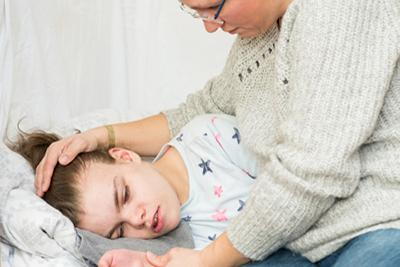
Safety and monitoring are key. Parents can place the child gently on the floor or a flat surface and turn the child on their side to help protect their airway. Avoid placing objects in the mouth or restraining movements. Watching the length of the seizure helps determine when to seek emergency care. Once the child is recovering, call your pediatrician or epilepsy specialist to discuss the next steps.
Support Through Telehealth
At Precision Epilepsy, led by Dr. John Millichap, we guide families through febrile seizure care with personalized telehealth support. Based in Chicago, IL, Dr. Millichap supports families across multiple states, providing education on seizure signs that require medical attention and helping parents feel prepared if a future episode occurs.
To schedule a telehealth consultation with Dr. Millichap, call Precision Epilepsy at 833-530-3034. Visit our website to learn more about the states we serve and how we can help your family manage febrile seizures with confidence.
- posted: Dec. 11, 2025
At Precision Epilepsy, led by Dr. John Millichap, we provide families with expert care for pediatric epilepsy and seizure management through telehealth. Based in Chicago, IL, Dr. Millichap supports families across multiple states, helping parents understand when a febrile seizure can be managed at home and when specialized neurological care may be needed. Because febrile seizures can be sudden and frightening, knowing the warning signs helps parents respond confidently.
Understanding Febrile Seizures
Febrile seizures are sudden convulsions in young children caused by a rapid rise in body temperature. They most often occur between six months and five years of age. While the episode can look frightening, it typically lasts a short time and does not cause long-term harm. Some children experience only one seizure in their lifetime, while others may have repeat episodes, especially if there is a family history or the child is very young when the first seizure occurs.
Signs That Need Immediate Care
Most febrile seizures are brief, lasting seconds to a minute, and do not recur on the same day. However, certain warning signs mean a medical evaluation is important. Seek emergency care if a seizure lasts longer than five minutes, affects only one side of the body, or happens more than once within 24 hours. Difficulty waking up afterward, unusual confusion, or behavior that seems very different from normal can also indicate the need for further assessment.
When to Contact a Pediatric Epilepsy Specialist
Parents should contact a specialist after a child’s first febrile seizure or when episodes become recurrent. A neurological assessment helps determine whether the seizure was caused by a rapid temperature change alone or if other factors are involved. In some cases, a specialist may recommend follow-up testing to understand the pattern of the seizures and guide care. Education on safety steps during a seizure is also an important part of support.
How Parents Can Respond During a Seizure
Safety and monitoring are key. Parents can place the child gently on the floor or a flat surface and turn the child on their side to help protect their airway. Avoid placing objects in the mouth or restraining movements. Watching the length of the seizure helps determine when to seek emergency care. Once the child is recovering, call your pediatrician or epilepsy specialist to discuss the next steps.
Support Through Telehealth
At Precision Epilepsy, led by Dr. John Millichap, we guide families through febrile seizure care with personalized telehealth support. Based in Chicago, IL, Dr. Millichap supports families across multiple states, providing education on seizure signs that require medical attention and helping parents feel prepared if a future episode occurs.
To schedule a telehealth consultation with Dr. Millichap, call Precision Epilepsy at 833-530-3034. Visit our website to learn more about the states we serve and how we can help your family manage febrile seizures with confidence.
